
Skin Checks and Knowing When to See Your GP
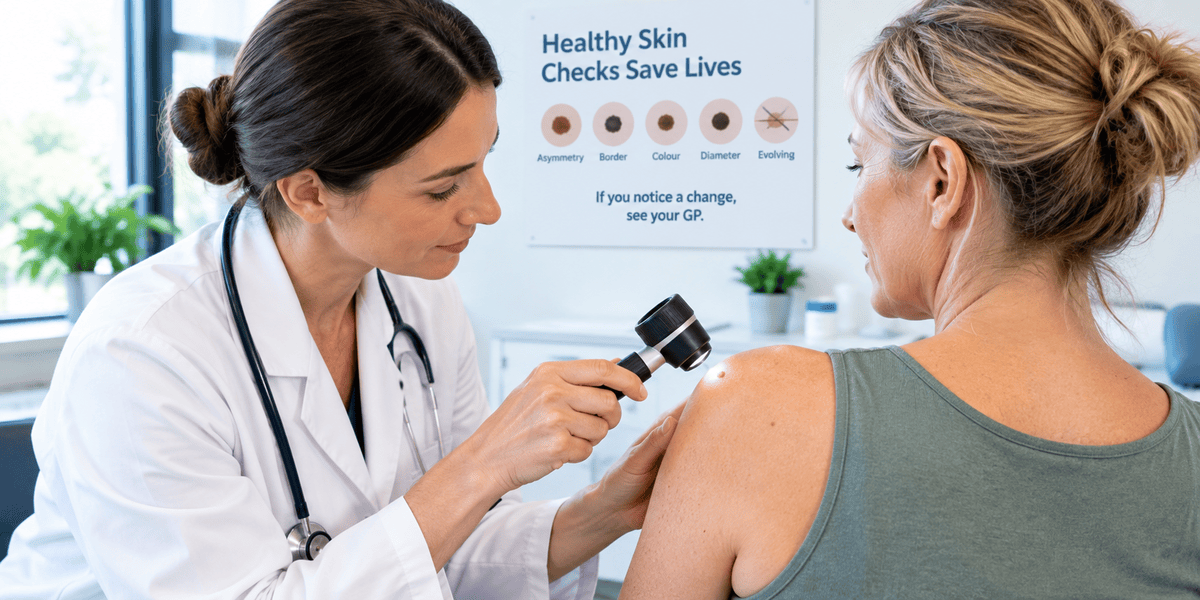
Skin Checks and Knowing When to See Your GP Many men are busy with work, family and other r Australia has high levels of ultraviolet radiation, and skin cancer is a common health concern. Knowing your skin and noticing changes can help you decide when it is time to speak with a GP. A skin check is a medical examination of the skin. During a skin check, a doctor can look at spots, moles and other areas of concern and decide whether further assessment may be needed. Cancer Council Australia recommends seeing a doctor if you notice a new or changing spot. Why Skin Checks Matter Many skin changes are harmless. However, it is not always possible to tell what a spot is simply by looking at it yourself. Skin cancers can look different from one person to another. Some may appear as a new spot, while others may develop from an existing mole or area of skin. Cancer Council Australia recommends becoming familiar with your own skin so you can notice changes. This is particularly relevant for people who spend a lot of time outdoors. What Should You Look For? When checking your skin, look for changes that are new or different. These may include: A new mole or spot A spot that changes in size A change in the shape of a mole A change in colour A spot that looks different from your other spots A sore that does not heal A spot that becomes itchy or painful A spot that bleeds or develops a crust These changes do not necessarily mean you have skin cancer. However, they are reasons to speak with your GP for an assessment. What Happens During a Skin Check? A skin check starts with a discussion about your skin and any concerns you have. Your doctor may ask about: Any new or changing spots Previous skin problems Your family history Your history of sun exposure Previous skin cancer Any areas that are worrying you The doctor can then examine your skin. A dermatoscope may be used to look at spots more closely. This is a handheld magnifying device that can help a doctor examine features that may not be visible to the naked eye. If a spot appears concerning, your doctor may recommend further investigation. This may include a biopsy or referral to another medical professional, depending on what is found. Who May Need to Pay More Attention to Their Skin? Skin cancer can affect anyone. Some people may have a higher risk because of factors such as: Previous skin cancer A family history of melanoma Having many moles Fair skin that burns easily Regular outdoor work High levels of sun exposure A weakened immune system Cancer Council Australia notes that people at higher risk may need regular clinical skin examinations based on their individual circumstances. Your GP can discuss your individual risk and advise whether regular skin checks are appropriate for you. Do You Need a Full Body Skin Check? Not everyone needs the same type or frequency of skin examination. If you have noticed one particular spot, you may simply need to have that area assessed. For people with a higher risk of skin cancer, a doctor may recommend more regular clinical examinations. The important thing is to discuss your individual circumstances with your GP rather than assuming that one schedule applies to everyone. How to Check Your Skin at Home You can also get to know your own skin between medical appointments. Cancer Council Australia recommends checking your entire body, including areas that are not usually exposed to the sun. You can: Check your skin in a well lit room. Use a full length mirror. Use a hand mirror for areas that are difficult to see. Ask someone you trust to help check areas such as your back. Take note of new or changing spots. Speak with your GP if you notice something that concerns you. Regularly checking your skin can make it easier to notice changes. What About Skin Cancer Apps? There are smartphone apps that allow people to photograph and track skin spots. However, Cancer Council Australia advises that smartphone apps should not be used as a substitute for a medical skin examination. If you are concerned about a spot, it is better to have it assessed by a healthcare professional. When Should You See Your GP? You should speak with your GP if you notice: A new spot A changing mole A spot with different colours A sore that does not heal A spot that bleeds A spot that becomes itchy or painful A spot that looks different from the others You do not need to wait until a skin change becomes painful. Some skin cancers may not cause pain or other symptoms. Skin Checks at Bopple Surgery If you have a skin concern, you can discuss it with your GP at Bopple Surgery in Tiaro. A GP can examine the area, discuss your concerns and determine whether further assessment may be appropriate. You can learn more about Bopple Surgery through the Bopple Surgery website. If you have a new or changing spot, speaking with your GP is a useful first step. Frequently Asked Questions How often should I have a skin check? There is no single schedule that applies to everyone. Your doctor can consider your personal risk factors and advise whether regular clinical skin checks are appropriate. Can skin cancer appear on areas that do not get much sun? Yes. Skin cancers can occur on areas that are not usually exposed to the sun, which is why it is useful to check your whole body. Does every unusual mole mean skin cancer? No. Many unusual looking spots are not cancerous. However, a new or changing spot should be assessed by a doctor if you are concerned. What happens if my GP finds a suspicious spot? Your GP may examine the spot more closely and may recommend further testing, such as a biopsy,